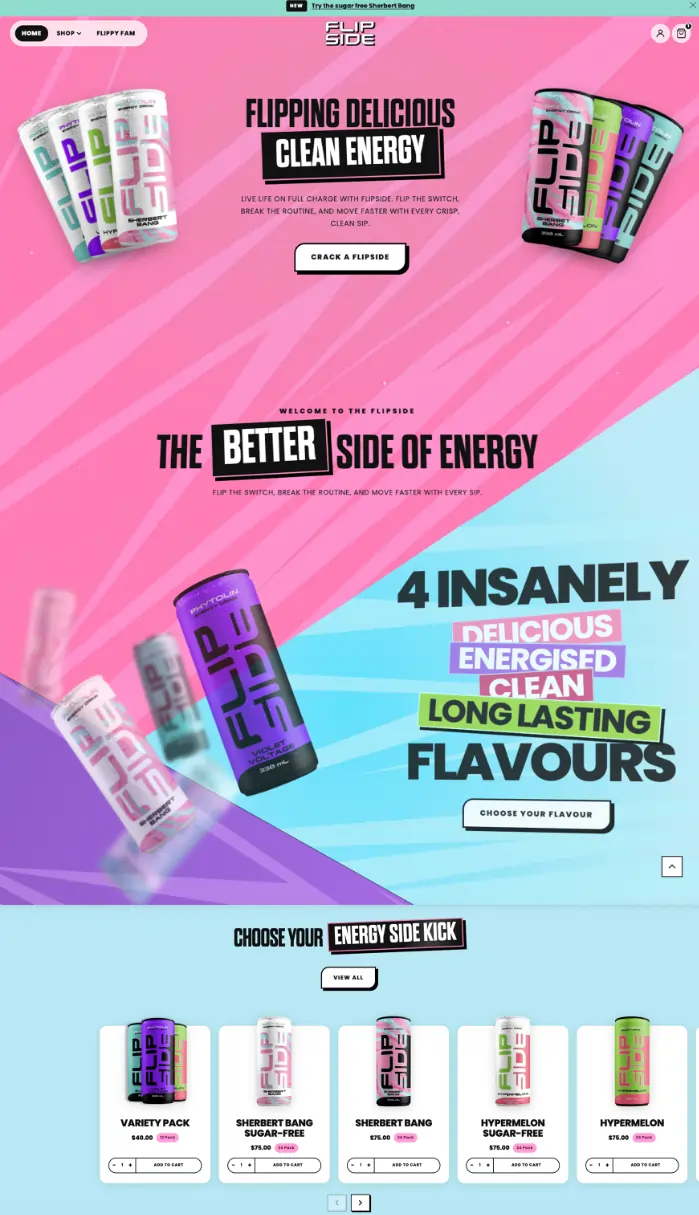
Dynamic Code's published FlipSide Energy work pairs a brand refresh with a Shopify website. That combination raises a useful design question: how does a visual identity remain coherent when it becomes a shopping experience with information, choices and transactions?
The scope and the lesson
The documented portfolio scope is the brand and storefront work. This article does not add unreported conversion figures, commercial results or implementation details. The lesson below is an interpretation of the relationship between those deliverables.
A brand can establish recognition and a distinctive tone. A store must also help a person identify the product, understand the offer and complete a purchase. These requirements should inform one another during the design process.
Translate identity into usable decisions
Use the identity to guide typography, colour, imagery and tone, then test those choices in the actual shopping tasks. A striking colour combination still needs readable product information. A distinctive typeface still needs to work at the sizes used for prices and controls.
Create a small set of reusable rules for product pages, promotional areas and checkout-adjacent messaging. This helps new content remain coherent after the original launch.
Keep product information concrete
A strong visual world does not replace details about what is being purchased. Make quantity, variants, price and relevant conditions easy to find. Show the product consistently enough that the customer can connect a campaign image with the item in the store.
When using creative imagery, preserve the distinction between atmosphere and evidence about the product itself.
Review the mobile sequence
Follow a visitor from campaign to product to cart on a phone. Check whether the brand remains recognisable without crowding out the controls. Look for interruptions caused by oversized media, unclear variant selection or a message that changes between stages.
Build for the next update
A storefront is maintained after launch. Document the rules and prepare templates that the operating team can use. The useful outcome is a buying experience that stays recognisable and understandable as products and campaigns change, rather than a launch design that only works with its original content.